

Articles
Riva vs traditional flush tanks which is better for your bathroom

Riva vs traditional flush tanks which is better for your bathroom
Ah, the humble toilet. Often overlooked, yet an absolute cornerstone of modern sanitation and bathroom design. For decades, the traditional flush tank – that ceramic monolith perched atop the bowl – reigned supreme. It was a simple, functional design, familiar to everyone. But as technology advances and our design sensibilities evolve, a sleek, often unseen challenger has emerged: the Riva concealed flush tank. This leads us to a fascinating question that many homeowners and renovators grapple with: Riva vs traditional flush tanks, which is better for your bathroom? It’s not just about flushing; it’s about aesthetics, space, maintenance, water conservation, and ultimately, the overall feel and functionality of your private sanctuary. Let’s dive deep into this comparison, weighing the pros and cons to help you make an informed decision for your next bathroom project.
Understanding the Contenders: Traditional vs. Concealed Design
Before we declare a winner in the debate of Riva vs traditional flush tanks, it’s crucial to understand what each system brings to the table. Let’s be honest, most of us have grown up with and are intimately familiar with the traditional setup.
The Traditional Flush Tank: A Familiar Fixture
Picture a classic toilet. You see the bowl, the seat, and right behind it, a prominent ceramic cistern. This is your traditional flush tank. It’s an exposed unit, meaning all its components – the tank itself, the fill valve, the flush valve, and the lever or buttons – are visible and easily accessible. Historically, this design has been straightforward to manufacture, install, and repair. Its robust presence is a hallmark of bathrooms from yesteryear right up to many contemporary homes. While perhaps not the pinnacle of design innovation, its reliability and simplicity have cemented its place in countless households.
The Riva Concealed Flush Tank: The Art of Disappearing
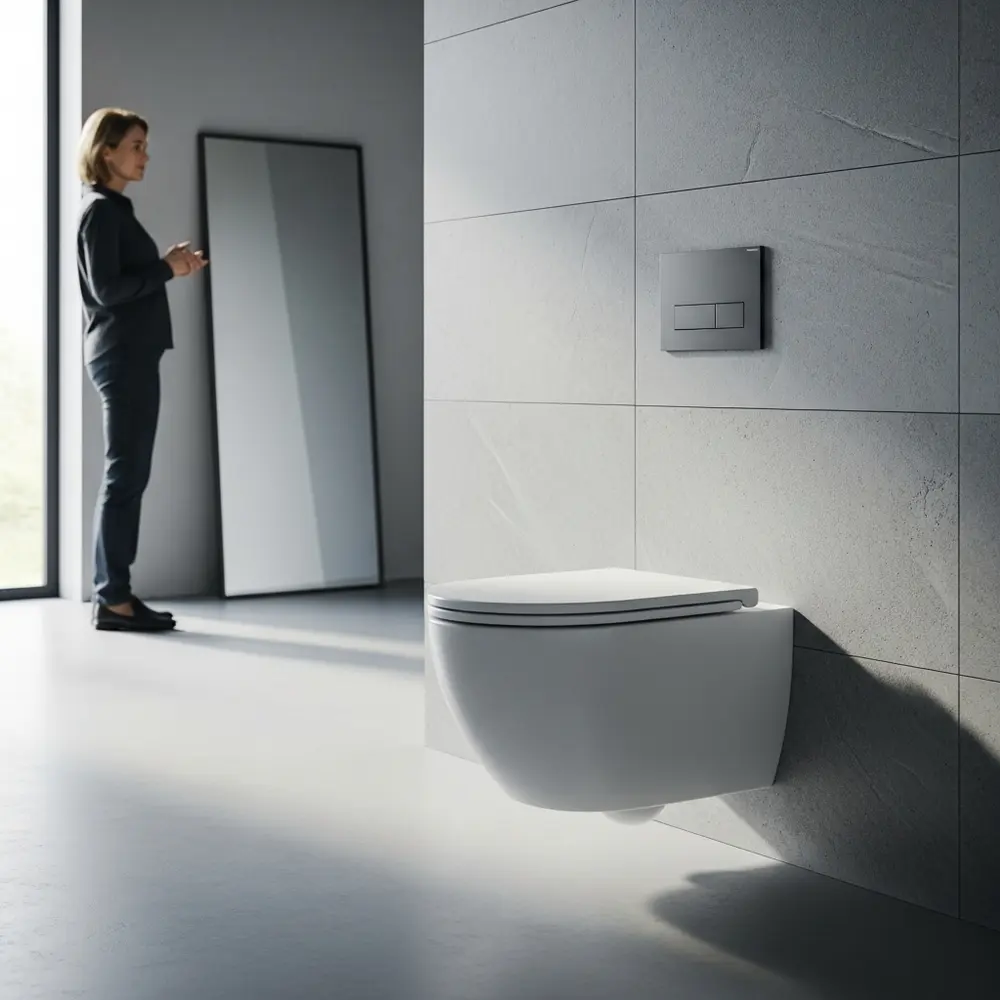
On the other hand, the Riva concealed flush tank represents a paradigm shift in bathroom design. As its name suggests, the entire cistern is hidden from view, typically within the wall cavity or behind a specially constructed stud wall. What remains visible is just the toilet bowl itself – often a wall-hung model, floating gracefully above the floor – and a sleek flush plate on the wall. This minimalist approach transforms the bathroom, creating an illusion of space and an uncluttered aesthetic that resonates with modern design trends. It’s a design choice that prioritizes clean lines and a streamlined look, turning a utilitarian necessity into a subtle, almost invisible, piece of engineering.
Aesthetics and Space-Saving: The Visual Impact
When it comes to the visual appeal and how much space your bathroom “feels” like it has, the difference between Riva vs traditional flush tanks is nothing short of dramatic. This is often the primary driver for choosing one over the other.
The Traditional Tank: An Unavoidable Presence
With a traditional flush tank, you get what you see. The cistern, whether chunky or slightly more streamlined, is a visible component of your bathroom’s design. In smaller bathrooms, this can make the space feel more cramped and visually busy. The ceramic mass can interrupt clean lines and become a focal point, sometimes not for the better. While some vintage designs embrace this prominence, for most modern sensibilities, it can feel bulky and dated. It occupies valuable visual and physical real estate, which in compact urban dwellings, can be a significant drawback.
The Riva Concealed System: Embracing Minimalism
Here’s where the Riva concealed system truly shines. By tucking the cistern away inside the wall, you liberate a significant amount of visual space. The result is a bathroom that instantly feels larger, cleaner, and more sophisticated. Imagine a toilet bowl that appears to float, with no visible plumbing or tank. This creates an uninterrupted floor space, making cleaning easier and contributing to an overall sense of airiness. Furthermore, the selection of flush plates – the only visible component of the flushing mechanism – offers an opportunity for further personalization, allowing you to choose a style and finish that perfectly complements your bathroom décor. You can find a wide array of Riva flush plates in different colors to match any aesthetic.
Performance and Functionality: Beyond the Flush
Beyond looks, how do these two systems stack up in terms of day-to-day operation, efficiency, and maintenance? The answer to the question “Riva vs traditional flush tanks, which is better for your bathroom” often lies in these practical considerations.
Flushing Efficiency and Water Conservation
Traditional flush tanks have evolved over the years, with many modern models incorporating water-saving features. However, the design limitations often mean they operate with a single, fixed flush volume or a basic dual-flush mechanism. In contrast, many Riva concealed flush tank models are specifically engineered for superior water efficiency. The vast majority feature an advanced Riva dual-flush system, offering a choice between a full flush (for solid waste) and a reduced flush (for liquid waste). This precise control can lead to significant water savings over time, a crucial consideration for both your utility bills and the environment. These systems are often designed with precision engineering to ensure an effective flush with less water, minimizing the need for multiple flushes.
Maintenance and Accessibility: The Real-World Test
This is a common concern for many contemplating a concealed system. “What happens if it breaks?” they ask. With traditional tanks, accessing internal components is usually straightforward – just lift the lid. With Riva concealed tanks, the internal mechanism is indeed hidden, but access is cleverly provided through the flush plate opening. Modern designs ensure that all serviceable parts are reachable through this opening, meaning there’s no need to break open your wall for routine maintenance or repairs. While initial Riva slim cistern installation might require a professional, subsequent maintenance is surprisingly user-friendly. In fact, some argue that because the components are protected within the wall, they are less susceptible to external damage, dust, or tampering, potentially extending their lifespan compared to exposed traditional mechanisms.
Noise Levels: A Quieter Experience
Have you ever been startled by the loud gurgle and refill of a traditional toilet in the middle of the night? The noise of flushing and refilling is a common characteristic. With a Riva concealed flush tank, much of that operational noise is muffled by the wall itself. The sound of water filling the cistern is significantly reduced, contributing to a quieter and more peaceful bathroom environment, a benefit often overlooked but deeply appreciated, especially in en-suites or smaller homes where sound travels easily.
Installation Considerations: Renovation vs. New Build
The practicalities of installation are a significant factor when weighing Riva vs traditional flush tanks. This isn’t just about plumbing; it’s about structural work, time, and budget.
Traditional Tank Installation: Simplicity Personified
Installing a traditional flush tank is generally a simpler, less invasive process. The toilet unit comes largely assembled and only requires connecting to the water supply and waste pipe, then securing it to the floor. This makes it a popular choice for quick replacements or minor bathroom refreshes. The plumbing is exposed, making it easy to see and connect, and often a confident DIY enthusiast can handle the installation, saving on labor costs. It’s truly a plug-and-play solution in many respects.
Riva Concealed Tank Installation: A More Involved Process
Installing a Riva concealed flush tank, particularly with a wall-hung toilet, is a more involved undertaking. It typically requires building a frame within the wall (or a false wall) to support the cistern and the toilet bowl. This means more labor, and potentially structural modifications, making it a better fit for new constructions or extensive bathroom renovations. While it requires specialized knowledge for initial installation, the result is a superior aesthetic and functional outcome. However, it’s worth noting that the long-term benefits in terms of space and design often outweigh the initial complexity for those committed to a modern look. Finding the right professionals for Riva concealed flush tank models is key.
Water Conservation and Sustainability: An Eco-Friendly Stance
In an era where environmental consciousness is paramount, the choice between Riva vs traditional flush tanks can also be an ecological one.
The Eco-Friendly Edge of Concealed Systems
As mentioned earlier, the dual-flush functionality inherent in most Riva concealed systems provides a distinct advantage in water conservation. By giving users the option to choose between a full or partial flush, these systems drastically reduce the amount of potable water consumed for waste disposal. This translates to less strain on local water resources and lower water bills for the homeowner. Over the lifespan of a toilet, these savings can be substantial, making it a responsible choice for the planet and your wallet. Traditional tanks are catching up, but the design freedom of concealed units often allows for more sophisticated water-saving mechanisms.
Long-Term Savings and Green Credentials
Beyond the immediate financial benefits, opting for a water-efficient system like Riva contributes to a home’s overall “green” credentials. This can be an attractive feature for potential buyers in the future, as energy and water efficiency become increasingly important factors in property value. It’s not just about making a choice for today; it’s about investing in a sustainable future for your home and the environment.
Cost Analysis: Upfront Investment vs. Long-Term Value
No discussion about home improvements is complete without addressing the elephant in the room: cost. Let’s compare the financial outlay when considering Riva vs traditional flush tanks.
Traditional Tanks: The Budget-Friendly Option
Generally speaking, traditional flush tank toilets have a lower upfront cost. The units themselves are typically less expensive to purchase, and as we’ve discussed, the installation is simpler and therefore less costly in terms of labor. If budget is your absolute primary concern and you’re not planning a major overhaul, a traditional toilet often presents the most economical solution for immediate needs. This makes them a go-to for landlords, quick flips, or when a reliable, functional toilet is needed without extra frills.
Riva Concealed Systems: An Investment in Design and Efficiency
A Riva concealed flush system, along with its accompanying wall-hung pan and flush plate, represents a higher initial investment. The concealed cistern itself is often more complex, and the installation, requiring professional expertise and potentially more construction work, adds to the overall cost. However, it’s crucial to view this as an investment. The aesthetic benefits – the creation of a more spacious, minimalist, and luxurious bathroom – can significantly enhance your home’s appeal and potentially its resale value. Furthermore, the long-term water savings from the efficient dual-flush system will contribute to lower utility bills year after year, slowly recouping some of that initial outlay. You can buy Riva concealed tanks online, which sometimes offers competitive pricing, but always factor in the full installation cost.
Which is Better for Your Bathroom? Making the Right Choice
So, after exploring all these facets, how do you answer the question: Riva vs traditional flush tanks, which is better for your bathroom? The truth, as with many home improvement decisions, is that there isn’t a single, universal “better.” It hinges entirely on your specific circumstances, priorities, and vision.
When a Traditional Flush Tank Makes Sense
- Budget Constraints: If you need a functional toilet at the lowest possible upfront cost.
- Simple Replacement: For a straightforward swap without major renovation work.
- Classic Aesthetic: If your bathroom style is more traditional or vintage, and the visible cistern fits the look.
- DIY Enthusiasm: For those who prefer easy access for maintenance and potentially simpler self-installation.
When a Riva Concealed System is the Clear Winner
- Modern Design Vision: If you’re aiming for a sleek, minimalist, and contemporary bathroom aesthetic.
- Maximizing Small Spaces: In compact bathrooms where every inch of visual and physical space counts.
- Noise Reduction: For en-suites or master bathrooms where quiet operation is highly valued.
- Water Conservation: If environmental impact and long-term water savings are a priority.
- New Builds or Major Renovations: When you have the opportunity and budget for the more involved installation.
- Enhanced Cleanliness: The wall-hung nature of concealed toilets makes floor cleaning significantly easier.
Ultimately, the decision boils down to a balance of aesthetics, functionality, budget, and long-term value. Are you prioritizing immediate cost savings and ease of installation, or are you investing in a contemporary design, enhanced space, and superior water efficiency that a Riva system can offer? Both options serve the fundamental purpose, but they do so with vastly different approaches to design and performance.
Conclusion
The debate of Riva vs traditional flush tanks, which is better for your bathroom, isn’t about one being inherently superior in all aspects, but rather about which one aligns best with your specific needs and desires. Traditional flush tanks offer a proven, cost-effective, and straightforward solution that has served generations well. They are robust, simple to maintain, and readily available. However, for those seeking to elevate their bathroom’s design, maximize space, reduce noise, and embrace advanced water-saving technology, the Riva concealed flush system presents a compelling and sophisticated alternative.
As you embark on your next bathroom project, take the time to consider not just the initial purchase price, but the entire lifecycle cost, the visual impact, and the day-to-day experience each option provides. Think about your lifestyle, your design aspirations, and your commitment to sustainability. By carefully weighing these factors, you can confidently choose the flush tank system that truly is better for your bathroom, transforming a utilitarian space into a harmonious and efficient oasis.