

Articles
Choosing the right Riva model for drywall or light partitions

Choosing the right Riva model for drywall or light partitions
When it comes to modern bathroom renovations, the shift toward minimalist, clean lines is more than just a passing trend; it is a fundamental change in how we perceive personal space. One of the most significant advancements in this arena is the transition from traditional floor-mounted toilets to sleek, wall-hung alternatives. However, this aesthetic upgrade brings a unique set of technical challenges, particularly when you are dealing with non-load-bearing walls. Choosing the right Riva model for drywall or light partitions is not simply about picking a product from a catalog; it is about understanding the synergy between structural engineering and interior design.
Let’s be honest: the idea of hanging a heavy ceramic fixture—and the person using it—on a wall made of gypsum board can be a bit nerve-wracking for the uninitiated. In traditional masonry construction, the wall itself does the heavy lifting. But in modern apartments and office buildings where light partitions are the norm, the responsibility shifts entirely to the hidden support system. This is where the importance of selecting a high-quality concealed cistern frame becomes paramount. If you don’t get this right, you risk wall cracks, leaks, or even structural failure. Fortunately, modern engineering has made these installations not only possible but incredibly reliable.
Understanding the Structural Needs of Light Partitions
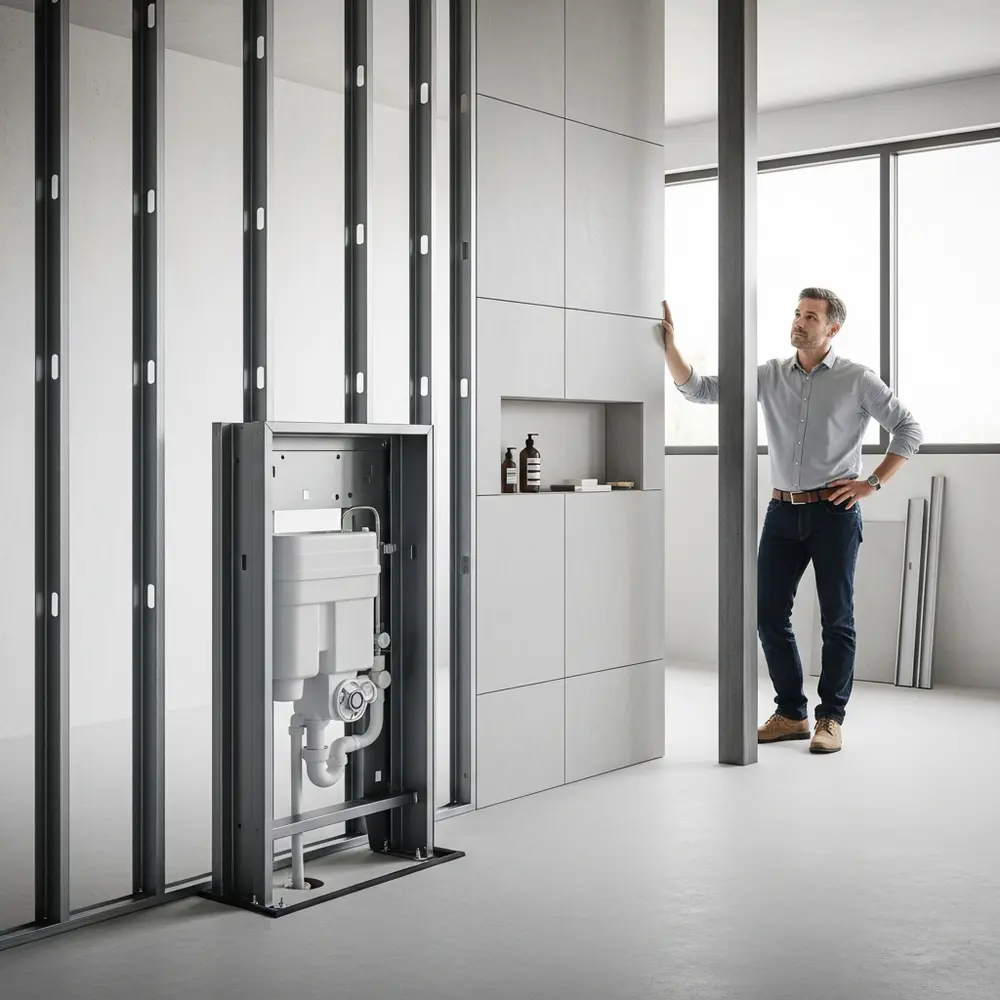
Before we dive into the specifics of Choosing the right Riva model for drywall or light partitions, we need to talk about what actually happens behind that smooth, painted surface. Drywall, or plasterboard, has very little inherent structural strength when it comes to holding lateral weight. If you were to bolt a toilet directly to the studs, the force would likely rip the bolts right through the material. A light partition requires a self-supporting frame—essentially a “skeleton” that transfers the weight of the toilet and the user directly to the floor rather than the wall itself.
Most modern light partitions consist of a metal or wooden stud framework. When you are integrated a concealed tank into this setup, you are looking for a model that features a robust, powder-coated steel frame. These frames are typically rated to hold up to 400 kilograms, which is more than enough for any standard residential or commercial application. In fact, when the installation is done correctly, the wall-hung toilet feels more stable than its floor-mounted predecessor. The key is in how that frame is anchored to the subfloor and the vertical studs.
Another factor to consider is the depth of the wall cavity. In many urban apartments, space is at a premium, and the partitions are designed to be as thin as possible. This is why many homeowners look for Riva slim cistern installation options. These models are engineered to fit into narrow cavities, sometimes as shallow as 8 or 10 centimeters, without compromising on the water volume or the mechanical integrity of the flush mechanism. By choosing a slim model, you can save several inches of floor space, which can make a massive difference in a small powder room or an ensuite bathroom.
Why Choosing the right Riva model for drywall or light partitions Matters for Durability
Durability in plumbing is not just about how long the plastic tank lasts; it’s about how the entire system ages under stress. When you are Choosing the right Riva model for drywall or light partitions, you are essentially investing in the “spine” of your bathroom. A high-quality model will feature high-density polyethylene (HDPE) tanks that are blow-molded in one piece. This single-piece construction is vital because it eliminates seams, which are the primary points of failure where leaks can develop over time. Since the tank is hidden behind a wall, the last thing any homeowner wants is a slow leak that remains undetected until it has rotted the floor joists or the drywall studs.
Furthermore, the internal components play a huge role in the user experience. We have all dealt with toilets that continue to run or require multiple flushes to get the job done. A superior concealed system will incorporate a sophisticated Riva dual-flush system. This technology allows the user to choose between a full flush for solids and a reduced flush for liquids, significantly cutting down on water consumption. In an era where environmental consciousness is both a moral and financial priority, having a high-efficiency flush mechanism is a non-negotiable feature. These systems are designed to be quiet, reliable, and easy to actuate, providing a premium feel every time you use the bathroom.
The Role of Insulation and Noise Reduction
One often overlooked aspect of Choosing the right Riva model for drywall or light partitions is acoustics. Light partitions, by their nature, are not great at blocking sound. If you install a standard cistern directly against a stud wall, the sound of the tank refilling can echo through the entire house. This is especially problematic if the bathroom is adjacent to a bedroom or a quiet living area. To combat this, premium concealed models come equipped with acoustic insulation jackets. This polystyrene shell serves two purposes: it dampens the sound of rushing water and prevents condensation from forming on the outside of the tank. Without this insulation, temperature fluctuations could cause moisture to drip inside the wall, leading to mold growth—a nightmare scenario for any drywall-based construction.
Installation Considerations for Drywall Professionals
From a contractor’s perspective, the ease of installation is a major selling point. When you are in the process of Choosing the right Riva model for drywall or light partitions, look for features that simplify the leveling and anchoring process. High-quality frames usually feature adjustable feet with a braking system, allowing a single installer to set the height of the toilet accurately without needing a second pair of hands to hold the frame in place. This precision is crucial because even a few millimeters of tilt can lead to issues with the ceramic fitment or the drainage slope.
Moreover, the connection points for the water supply and the waste pipe should be easily accessible. Many professional-grade models offer “tool-free” maintenance, meaning that the internal valves can be reached and serviced through the opening behind the flush plate. This is a critical design feature. Since you aren’t going to tear down your beautiful tiled wall every time a washer needs replacing, the flush plate serves as your service hatch. A well-designed Riva model ensures that all moving parts are within arm’s reach through this portal.
Load Bearing and Safety Standards
Is it safe? This is the most common question asked by those Choosing the right Riva model for drywall or light partitions. The answer is a resounding yes, provided the frame is intended for “dry” construction. These frames are designed to stand on their own “feet.” While they are braced against the wall studs for lateral stability, the vertical load is transferred down to the floor. This is a significant distinction from “wet” construction models, which are designed to be encased in solid brick and mortar and lack the heavy-duty legs required for light partitions.
When you browse the various Riva concealed flush tank models, you will notice that the engineering focuses on rigidity. The steel is often coated with a protective layer to prevent corrosion over decades of service. This is vital because the humidity levels in bathrooms can be high, and even though the frame is “behind” the wall, it still needs to withstand the micro-environment of the wall cavity. A sturdy frame also ensures that there is no “flex” when a person sits on the toilet. Any movement in the frame would eventually cause the grout lines between your tiles to crack or the silicone sealant to pull away from the wall.
Aesthetics and the Finishing Touch
While the engineering happens behind the scenes, the only part of the system you will actually see and touch daily is the flush plate. After Choosing the right Riva model for drywall or light partitions based on its structural merits, you get to focus on the fun part: the design. The flush plate is the “jewel” of the bathroom. It needs to complement your faucets, your towel rails, and the overall color palette of the room. This is why manufacturers offer Riva flush plates in different colors, ranging from classic polished chrome and brushed nickel to modern matte black or even custom glass and wood finishes.
The tactile feedback of the buttons also contributes to the perception of quality. A well-engineered button should have a smooth, short travel and a positive “click” or soft-close feel. This might seem like a small detail, but in luxury interior design, the “touch points” are what define the user experience. By selecting a high-end plate, you signal that every aspect of the bathroom has been curated for comfort and style. However, remember that the plate must be compatible with the specific tank model you have installed. It is always best to stick with the same brand for both the tank and the plate to ensure a perfect mechanical fit.
Step-by-Step Guide to a Successful Installation
If you are a DIY enthusiast or a homeowner overseeing a project, understanding the steps involved in Choosing the right Riva model for drywall or light partitions can help you ensure the job is done right. The process generally follows this timeline:
1. Preparation and Marking
Determine the desired height of the toilet. While there is a “standard” height, many people prefer a “comfort height” setup, especially for those with mobility issues. Mark the floor and the wall studs where the frame will be anchored. Ensure there is enough space for the drainage pipe to have a proper 2% slope towards the main stack.
2. Securing the Frame
Once the heights are set, the frame is bolted to the floor. If you are working with a wooden subfloor, ensure you are hitting the joists or have added extra blocking. For concrete floors, heavy-duty expansion bolts are required. The top of the frame is then braced against the wall studs using adjustable threaded rods. This allows you to get the frame perfectly plumb, even if the wall studs are slightly out of alignment.
3. Plumbing Connections
Connect the water supply to the cistern. It is highly recommended to use a flexible connector or a solid copper pipe depending on local building codes. Next, install the waste pipe elbow. Most Riva frames come with a multi-fit elbow that can be adjusted to various angles. At this stage, it is vital to pressure test the system. Fill the tank, check the valves, and ensure there are no drips. It is much easier to fix a leak now than after the drywall is up.
4. Wall Boarding and Tiling
Once the plumbing is verified, you can install the drywall. You should use moisture-resistant “green board” for bathrooms. Cut the holes for the flush plate, the flush pipe, and the waste pipe using the template provided with the kit. After the drywall is screwed into the studs (and the frame itself in some cases), you can proceed with tiling. The thickness of the tile and adhesive should be taken into account when cutting the final lengths of the flush and waste pipes.
5. Final Fitment
After the grout has dried, the ceramic toilet bowl is mounted onto the threaded rods protruding from the frame. The flush plate is then snapped into position. This is the moment where the hard work pays off, as the toilet appears to “float” effortlessly off the floor.
Common Mistakes to Avoid
Even when Choosing the right Riva model for drywall or light partitions, things can go wrong if you aren’t careful. One of the biggest mistakes is failing to use a protection cover during the tiling process. Dust and grout can easily get into the flush valve mechanism, causing it to leak or stick from day one. Always keep the protective yellow or blue plastic covers on the pipes and the flush plate opening until the very last minute.
Another common error is not checking the wall’s depth. If your wall cavity is only 90mm deep and you buy a 120mm deep tank, you are going to have a very frustrating day. Always measure twice and buy once. Furthermore, don’t skimp on the thickness of the wall board. For a wall-hung toilet, it is often recommended to use a double layer of 12.5mm drywall or a single layer of 18mm high-density cement board to provide extra rigidity around the toilet’s pressure points.
The Long-Term Value of a Professional System
Investing in a high-quality concealed system is about peace of mind. When you decide to buy Riva concealed tanks online, you are not just buying a plastic box; you are buying decades of engineering research. These systems are designed to be forgotten. They work silently in the background, day in and day out, without requiring your attention. The aesthetic benefit of a wall-hung toilet—namely, the ability to clean the entire floor underneath it—is a massive plus for hygiene, but the real value lies in the reliability of the hidden components.
In many ways, the bathroom is the most complex room in a house. It combines structural integrity, waterproofing, plumbing, and high-end finishes in a very small footprint. By Choosing the right Riva model for drywall or light partitions, you are ensuring that the foundation of your bathroom is as strong as the design is beautiful. Whether you are a developer looking for consistency across a hundred units or a homeowner building your dream ensuite, the frame you choose is the most important decision you will make in that room.
In conclusion, don’t be intimidated by the technical requirements of light partitions. Modern technology has solved the problems of the past. With a robust steel frame, a silent and efficient tank, and a stylish flush plate, you can create a bathroom that feels open, airy, and modern. The key is simply to do your homework and choose a system designed specifically for the job at hand. The Riva brand provides that bridge between technical excellence and aesthetic elegance, ensuring your bathroom remains a sanctuary for years to come.
Choosing the right Riva model for drywall or light partitions
First paragraph here…
Section Title
…
…